Regional Planning

REGIONAL PROJECT PLANNING

WILDFIRE PLANNING & PROJECT FUNDING:

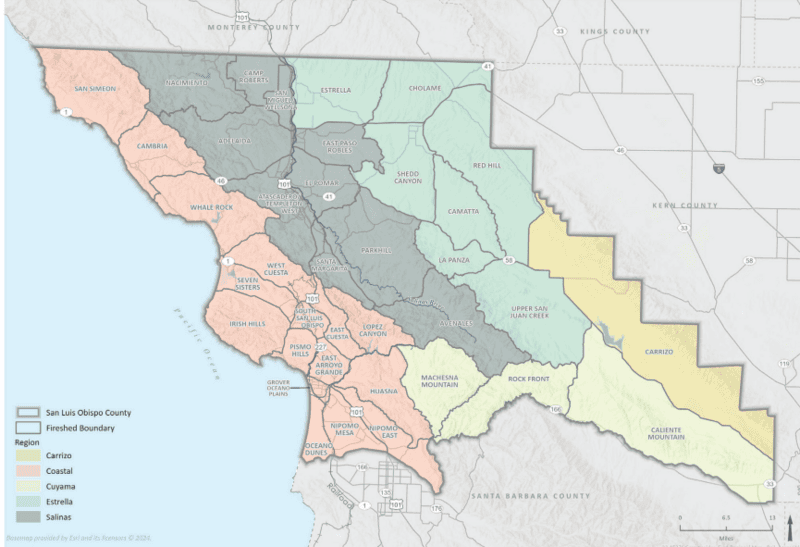
The San Luis Obispo County Fire Safe Council leads data-driven wildfire planning and serves as a regional clearinghouse for priority project proposals, helping partners secure and deploy multiple grant funding sources with the common goal to reduce wildfire risk across all lands in San Luis Obispo County.

GUIDANCE

PLANNING DOCUMENTS

Regional partners work together to identify, coordinate, prioritize, and advance wildfire and forest resilience projects that protect communities and natural resources. These efforts are guided by these documents. 

These documents emphasize broad stakeholder inclusion and transparent decision-making. These documents are living frameworks that are regularly updated to reflect new data, evolving conditions, and local input, ensuring projects remain effective, relevant, and community-driven.

Through this coordinated approach, partners align resources, funding opportunities, and implementation strategies to maximize impact across jurisdictions. Projects are evaluated based on risk reduction, community benefit, feasibility, and consistency with these guiding documents, ensuring that investments are strategic and focused on long-term resilience outcomes for San Luis Obispo County.

This process strengthens regional collaboration by bringing together public agencies, non-governmental organizations, tribal partners, and community-based groups to share data, leverage expertise, and coordinate implementation. By integrating local knowledge with technical analysis, partners identify priority areas, reduce duplication, and accelerate project delivery while improving grant competitiveness.

.

GOVERNANCE

COLLABORATIVE

The San Luis Obispo County FireSafe Council (SLOFSC), operates as the governing and coordinating body for the Regional Priority Planning process. Its board consists of 34 voting and 12 non-voting members representing governmental entities (special districts, municipalities, county, state, and federal agencies), tribal organizations, non-governmental organizations (NGOs), local community fire safe focus groups, and interested public members with a vested concern in wildfire and Wildland Urban Interface impacts.

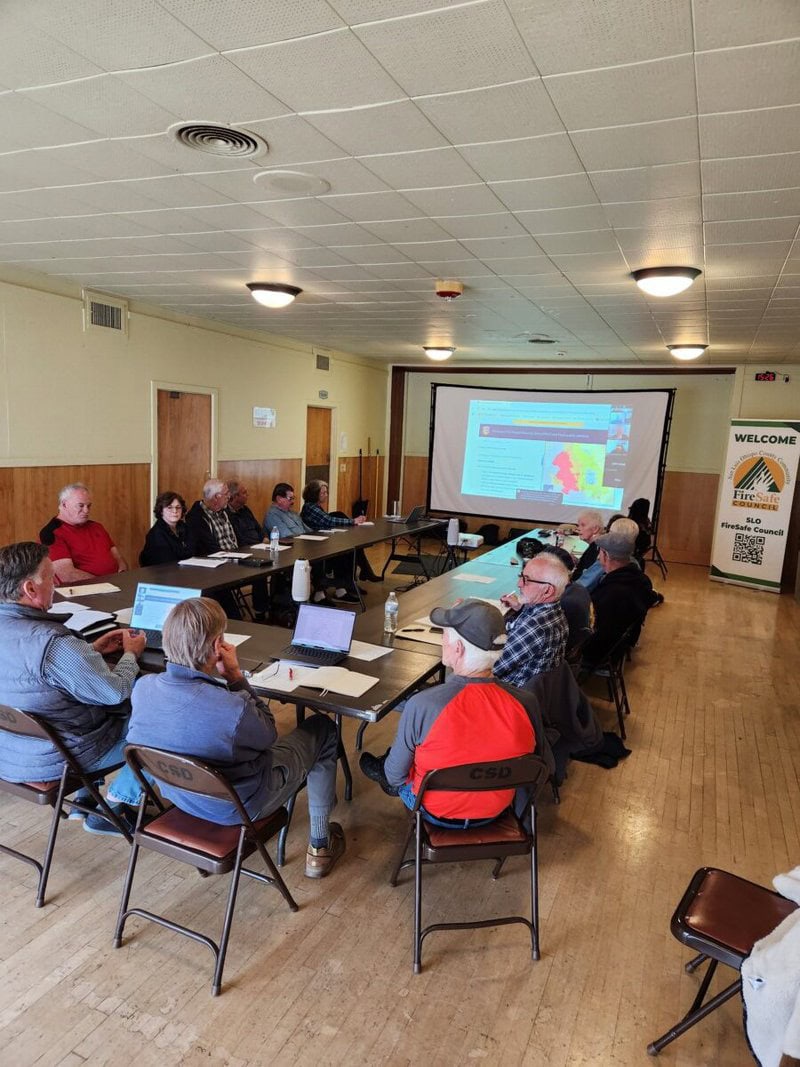
FSCSLO Meetings are open to the public. Organizations and public members can get involved with the SLOFSC through community grassroots level Fire Safe Focus Groups or attending regularly scheduled SLOFSC board of director meetings that are open to the public and decisions are public. The SLOFSC voting members, non-voting ex-officio members, and 13 community level fire safe focus groups directly reach more than 200 people countywide.

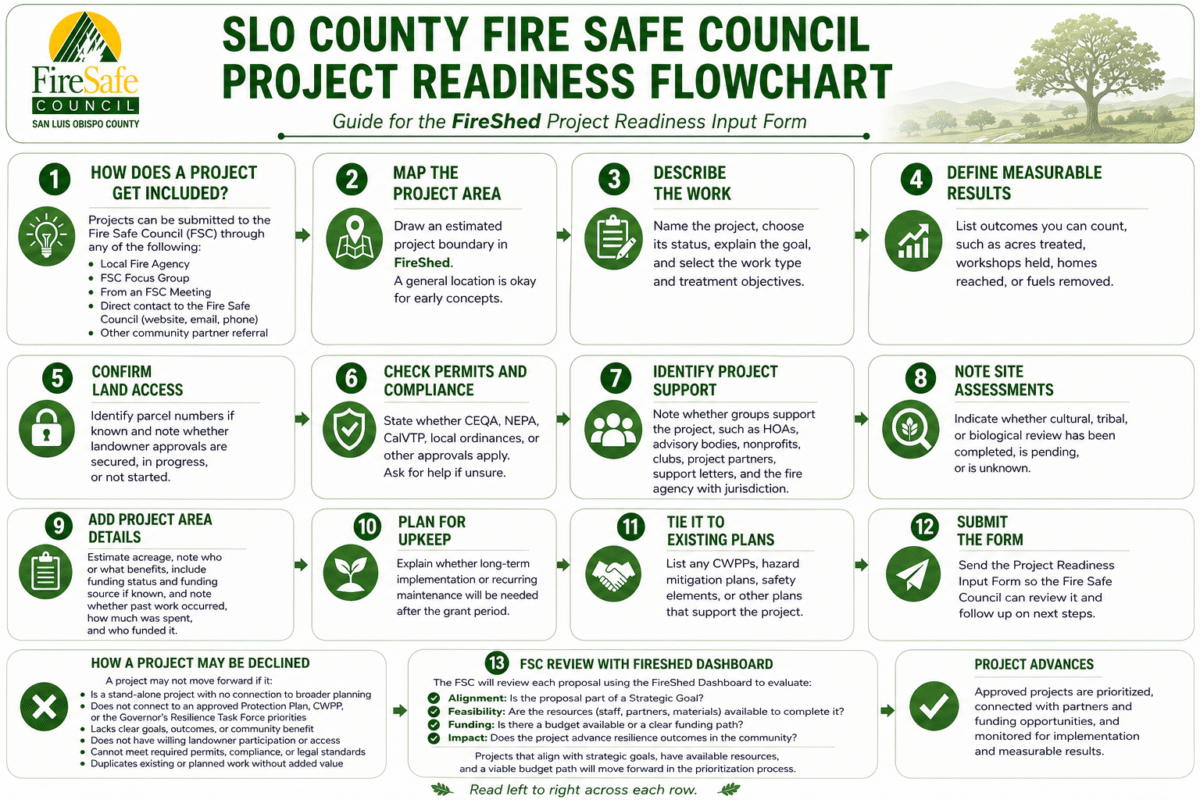
The SLOFSC is responsible for preparing and managing the SLOFSC Fireshed RPP planning platform, soliciting and evaluating project proposals from both members and non-members. Proposal evaluation is conducted by a project review team comprising internal and external subject matter experts who leverage local expertise, mitigation strategies, land use policies, and Community Wildfire Protection Plan (CWPP) priorities to determine the preparedness and effectiveness of proposed projects,

METHODOLOGY

PROJECT ASSESSMENT

The San Luis Obispo County FireSafe Council (SLOFSC) assesses wildfire risk by combining local data, science, and community input to prioritize projects based on fuel conditions, community vulnerability, ecological values, and alignment with state and local resilience strategies. The approach is holistic, balancing fire risk reduction, ecosystem health, cultural values, and community safety to deliver lasting regional benefits across diverse landscapes and communities throughout San Luis Obispo County.

METHODOLOGY

Project proposals intended for the Fireshed regional planning process are submitted through the SLOFSC New Project proposal portal. Proponents provide detailed responses regarding their projects. Projects may include education and outreach, workforce development, research, planning,
vegetation management, community resilience, evacuation planning, hazard and risk reduction, Firewise Community initiatives, CWPP, or parcel risk reduction effort.

PORTFOLIO OF PROJECTS

The SLOFSC regularly updates the portfolio of ongoing projects it manages on its website (link). These projects represent funded and awarded efforts that directly support and implement the goals and priorities identified in the region’s guiding documents, including the Fireshed Regional Priority Plan and Community Wildfire Protection Plans.

Additionally, projects managed by other organizations are included as information becomes available, providing a comprehensive view of wildfire mitigation and resilience efforts across San Luis Obispo County.

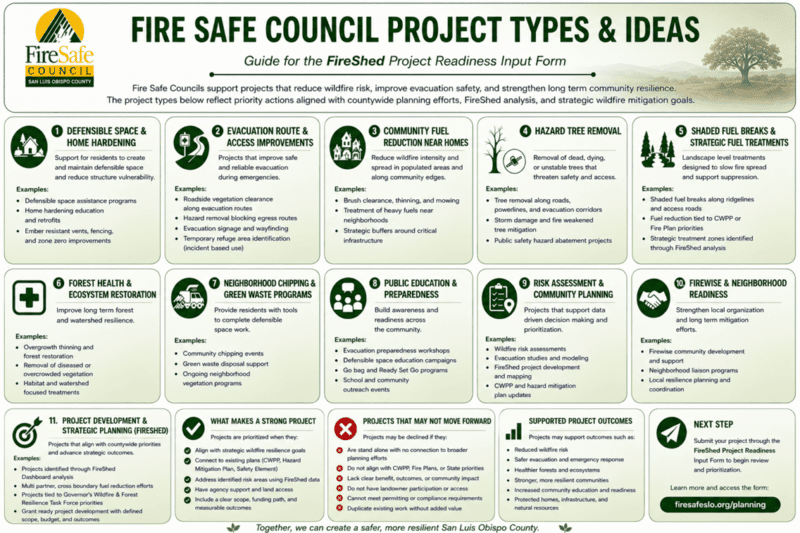
SUPPORTED PROJECT TYPES

EDUCATION & OUTREACH

Deliver workshops, materials, and events to inform the public about wildfire mitigation.

Engage community members to gather input and encourage participation.

Promote defensible space, home hardening, and evacuation readiness

RESEARCH


Collect and analyze data to improve wildfire behavior understanding.

Evaluate mitigation, restoration, and forest health practices.

Use imagery, field data, and demonstration projects to inform best practice

PLANNING


Develop project designs, permits, and implementation strategies aligned with the CWPP and FireShed.

Coordinate stakeholders and resources to deliver priority wildfire mitigation projects.

Prepare environmental compliance documentation and secure required agency approvals.

VEGETATION TREATMENT

Trim, thin, and remove vegetation to reduce wildfire intensity in the WUI and along evacuation routes.

Eliminate ladder fuels and create defensible space.

Support forest and watershed health through thinning, prescribed fire, and restoration

COMMUNITY RESILIENCE

 Retrofit homes to increase resistance.

Install ember resistant vents, gutter guards, and noncombustible material.

Improve the 0 to 5 foot zone for structure protection

EVACUATION PLANNING FOR COMMUNITIES

 Use simulations and GIS data to predict evacuation movement.

Identify bottlenecks and optimize evacuation routes.

Support emergency services with scenario based planning tools.

COMMUNITY  HAZARD  & RISK REDUCTION

Implement fuel breaks and defensible space in shared areas.

Improve HOA and open space wildfire resilience.

Conduct inspections and treat evacuation corridors.

PARCEL RISK  REDUCTION & ASSESSMENT

Provide home specific defensible space improvements.

Conduct individual property wildfire risk assessments.

Increase resilience at the single parcel level

PORTFOLIO OF CURRENT PROJECTS

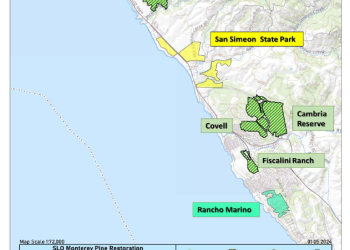
The SLO County FireShed portfolio includes current, funded projects across multiple jurisdictions. Projects span planning, outreach, fuel reduction, restoration, access improvements, and landscape resilience, showing partners working together to protect communities and ecosystems.

PROJECT CENTER

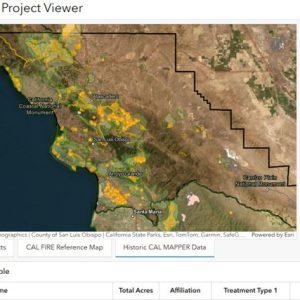
Project Center is a GIS viewer showcasing past projects we are proud to have supported. Explore project locations, funding, timelines, and treatment types across the county, highlighting real progress in wildfire mitigation and resilience.

PROJECT REVIEW TEAM

The project review team's prioritization recommendations are then presented to the full SLOFSC board of directors for approval. This prioritization determines which projects will be advanced by the collective SLOFSC effort for resource acquisition and regulatory endorsement, though proponents retain the ability to pursue independent implementation. The Fireshed project evaluation is advisory, providing guidance on project efficacy and informing regional priority-setting for the allocation of limited resources and project execution.